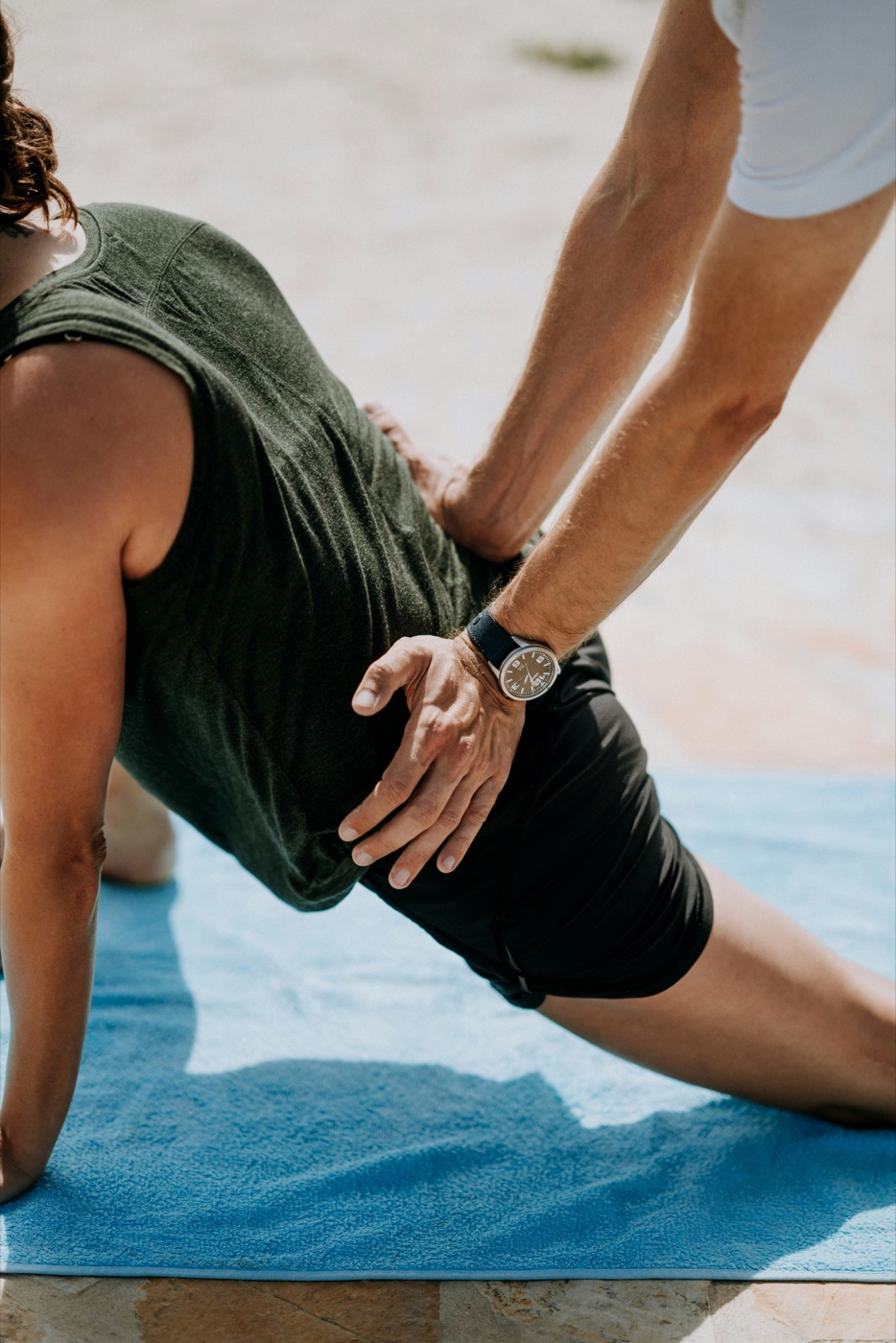
Most recreational athletes rely on passive recovery — ice, rest, foam rolling — which calms acute inflammation but doesn't fix the adhesions and compensation patterns behind recurring injuries. Targeted soft-tissue work, especially Active Release Techniques (ART®), addresses the root cause by releasing specific adhesions while the tissue actively moves.
Tampa Bay has a lot of athletes. Not just the professional kind, the Rays, Bucs, Lightning, and Rowdies, but the tens of thousands of recreational runners, cyclists, gym-goers, pickleball converts, and weekend warriors who train through the Florida heat and occasionally wreck their bodies doing it.
If you're one of them, and you've dealt with a recurring soft-tissue issue, a nagging hamstring, a tight IT band, a shoulder that just doesn't move right, you've probably tried a lot of things. Foam rolling. Stretching. Rest. Maybe a cortisone shot. Maybe a few sessions of physical therapy that helped but didn't stick.
Here's an honest look at what works, what doesn't, and what Dawn Wellness offers athletes in the St. Pete, Clearwater, and Tampa Bay area.
What Most Athletes Get Wrong About Recovery
The default recovery toolkit for most recreational athletes looks like this: ice, compression, ibuprofen, rest, and maybe some foam rolling. And while none of those things are bad, most of them are passive. They reduce acute inflammation and give your body time to heal on its own. They don't actively address the underlying soft-tissue dysfunction that's often at the root of recurring injuries.
Chronic sports injuries, the ones that keep coming back, are usually not about damaged tissue that needs more time. They're about adhesions, compensation patterns, and neurological protection responses that become self-reinforcing. Your IT band is tight because your hip flexor is short. Your shoulder hurts because your thoracic spine can't rotate. Your hamstrings feel like cables because your lumbar erectors have been overworking for three years.
Passive recovery doesn't fix these. Targeted, skilled soft-tissue work does.
Active Release Techniques® (ART®): What It Is and Why It's Different
Lucas Sands, the ART®-certified therapist on the Dawn Wellness team, works specifically with athletes and active adults dealing with stubborn structural or functional movement restrictions.
Active Release Techniques® (ART®) is a patented soft-tissue system recognized as the Gold Standard of Soft-Tissue Care®. It treats problems with nerves, ligaments, muscles, and tendons through a combination of:
- Precise palpation to identify adhesions in soft tissue
- Active movement from the patient combined with applied tension from the provider
- Systematic release of the adhesion as the tissue moves through its range
The key difference from standard deep tissue massage is specificity. ART® providers are trained to identify exactly where adhesions are located and which structures are involved, nerves, tendons, ligaments, or muscles, and to apply targeted tension to that specific location while the tissue moves. The result is a mechanical and neurological release that standard massage doesn't reliably achieve.
"ART® Certified Providers palpate for adhesions in soft tissues: the result of micro-trauma, scar tissue post injury, prolonged positioning, posture, and repetitive overuse. These are often a major contributor to pain."
What Conditions Respond Well to ART® and Sports Soft-Tissue Work?
- IT band syndrome, most common in runners and cyclists
- Plantar fasciitis, especially when conservative treatment has plateaued
- Rotator cuff dysfunction, common in overhead athletes and gym-goers
- Hip flexor tightness and groin pulls, frequent in soccer, football, and running athletes
- Tennis elbow and golfer's elbow (lateral and medial epicondylalgia)
- Thoracic rotation restrictions, where golfers especially see significant improvement
- Carpal tunnel and nerve entrapment issues in desk workers and racquet sport players
- Post-surgery scar tissue management, once cleared by your surgeon
How Luke Approaches Sports Clients
For Luke's sports massage work (separate from Lucas's ART® sessions), his approach combines deep tissue, sports-specific massage, and assisted stretching in a way that's built around your training schedule, not just how you feel on the day of the session.
Pre-event massage is different from post-event massage. In-season maintenance is different from off-season recovery. Luke asks about your training load, your event calendar, and your performance goals before recommending a service type and cadence.
Tampa Bay athletes who work with Luke consistently describe the same outcome: they train more consistently, recover faster between sessions, and stop managing the same injuries on a loop.
What Doesn't Work (or Is Overrated)
A few honest takes, in the spirit of transparency:
- Foam rolling is useful for general warm-up and mild myofascial work, but it cannot replicate the specificity of a skilled practitioner's hands. Don't use it as a substitute for actual treatment.
- Stretching alone is helpful for maintaining range, not restoring it in chronically tight athletes. Assisted stretching with a therapist is dramatically more effective.
- Ice reduces acute inflammation but may slow tissue remodeling if overused during the recovery phase. Cold therapy has its place, but it's not a treatment for soft-tissue dysfunction.
- Rest allows tissue healing but doesn't correct the movement compensations and adhesions that led to the injury. Coming back from rest without addressing the underlying issue means you'll likely re-injure.
Getting Started in St. Pete / Tampa Bay
Dawn Wellness is mobile throughout Pinellas and Hillsborough counties. Luke comes to your home, your condo, or your gym with everything needed for a full sports massage or assisted stretching session. Lucas handles ART® sessions through the same mobile booking platform.
The best first step is a free 15-minute phone call. Tell us what you're dealing with, how long you've had it, and what you've already tried. We'll tell you honestly what we think would help and whether it's something we can address.
Frequently Asked Questions
Why do my sports injuries keep coming back?
Recurring soft-tissue injuries are usually not about damaged tissue that needs more rest. They're about adhesions, compensation patterns, and neurological protection responses that reinforce each other — a tight IT band driven by a short hip flexor, for example. Passive recovery like ice and rest doesn't correct these; targeted, skilled soft-tissue work does.
What is Active Release Techniques (ART®) and how is it different from massage?
ART® is a patented soft-tissue system recognized as the Gold Standard of Soft-Tissue Care®. Unlike broad deep-tissue massage, an ART® provider precisely locates a specific adhesion and applies targeted tension to it while the tissue actively moves through its range, producing a mechanical and neurological release that standard massage doesn't reliably achieve.
Is foam rolling enough for recovery?
Foam rolling is useful for general warm-up and mild myofascial work, but it cannot replicate the specificity of a skilled practitioner's hands. It's a supplement to treatment, not a substitute for it.
What conditions respond well to ART® and sports soft-tissue work?
IT band syndrome, plantar fasciitis, rotator cuff dysfunction, hip flexor tightness and groin pulls, tennis and golfer's elbow, thoracic rotation restrictions, nerve entrapment issues like carpal tunnel, and post-surgical scar tissue once cleared by your surgeon.