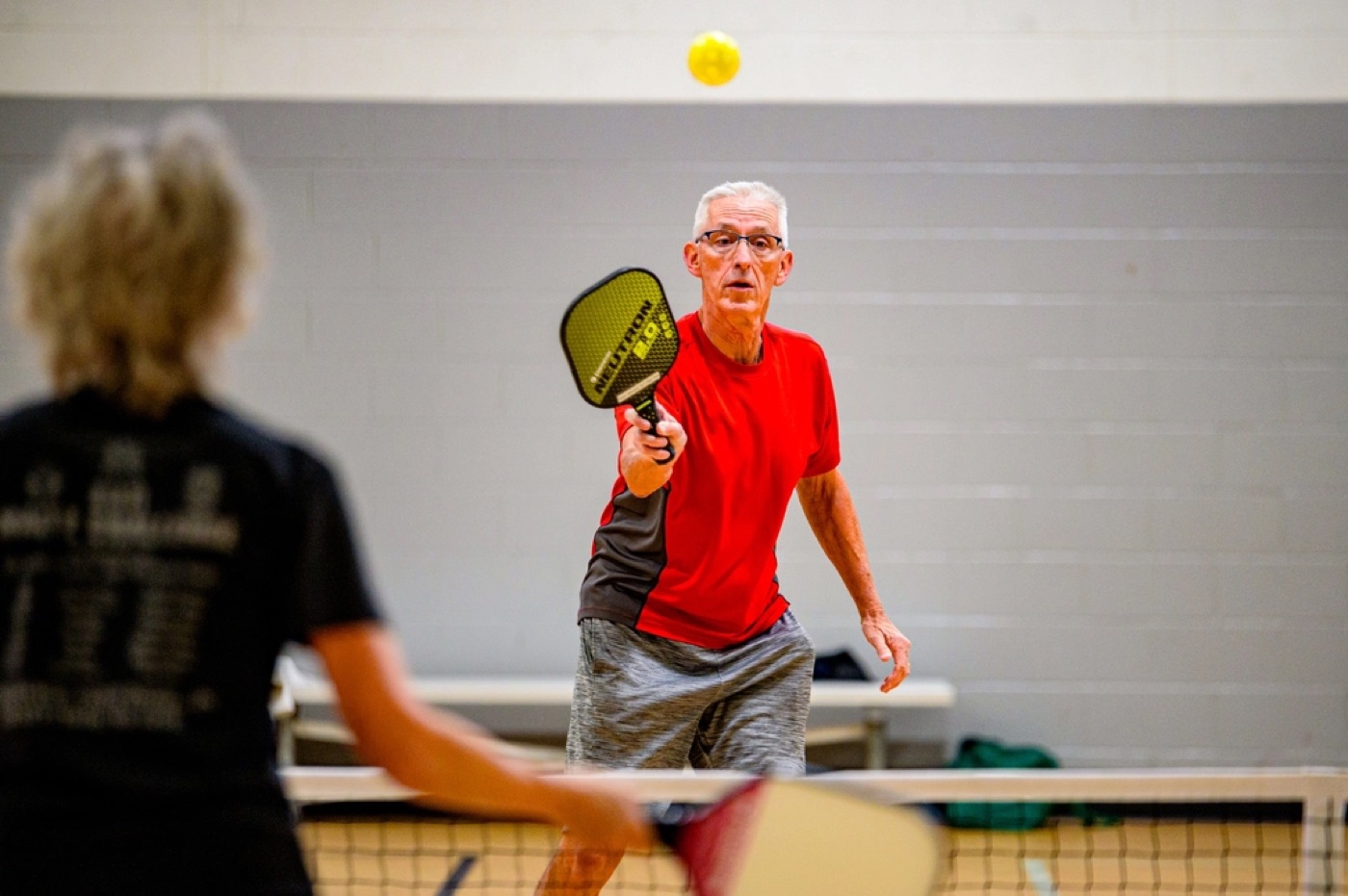
Pickleball's quick lateral cuts, sudden stops, twisting, and overhead reaching cause shoulder, elbow, knee, Achilles, and lower-back injuries — especially in players who don't warm up or whose tissue isn't prepared. Assisted stretching builds the hip, thoracic, shoulder, and calf range the sport demands so your body absorbs the load instead of tearing. Use a dynamic warm-up before play and save assisted stretching for recovery. Over-50 players benefit most.
Pickleball has taken over Tampa Bay. Courts are full from St. Pete to Clearwater, leagues are booked solid, and a huge share of new players are picking up a paddle for the first time in their 50s and 60s. It's fantastic for fitness, social life, and staying active. It's also sending a steady stream of people to therapists like me with injuries that were almost entirely preventable.
Why Pickleball Hurts So Many People
Pickleball looks gentle, but the movement pattern is deceptively demanding. You're making quick lateral cuts, stopping suddenly, twisting through your torso, and reaching overhead — repeatedly, often for hours, and frequently without any warm-up. The most common injuries I see are:
- Shoulder strains from overhead shots
- "Pickleball elbow" — irritation at the elbow from repetitive paddle work
- Knee pain from quick stops and direction changes
- Achilles and calf strains from explosive lateral movement
- Lower back tightness from all the twisting
Almost every one of these traces back to the same root: tight, underprepared tissue being asked to do explosive things.
How Stretching Changes the Equation
The sport demands range of motion that most people simply don't have anymore — rotation through the hips and mid-back, shoulder mobility for overhead reach, and flexibility in the calves and hips for quick changes of direction. When you have that range, your tissue absorbs the sport's demands. When you don't, the load goes somewhere it shouldn't, and you get hurt.
Assisted stretching is one of the most effective ways to build that range. I take the target muscles into a deeper range than you can reach on your own and retrain your nervous system to accept it. The payoff for pickleball players is real: better reach, more power, fewer tweaks, and faster recovery between matches.
Warm Up the Right Way Before You Play
Here's a distinction that matters: before you play, you want a dynamic warm-up, not long static stretches. Static stretching cold muscles right before explosive movement isn't the goal. Instead:
- Leg swings and hip openers to wake up the hips
- Gentle lateral shuffles to prime the direction-change pattern
- Arm circles and a few easy practice swings for the shoulder
Save longer static work and assisted stretching for after you play, or for dedicated recovery sessions. That's when deeper range work pays off without compromising your performance.
If You're Over 50 and Just Started
You're in the biggest and fastest-growing group of players — and unfortunately the one most prone to injury, because the tissue naturally stiffens with age and pickleball loads it hard. The good news is this is exactly where mobility work shines. Focus on hip and thoracic rotation, calf and Achilles flexibility, and shoulder range. Regular assisted stretching plus a consistent dynamic warm-up dramatically lowers your injury risk.
Stay on the Court
Pickleball should keep you active for years, not sideline you with an avoidable injury. If you're playing regularly — or planning to ramp up — book a free 15-minute consult. I'll assess where you're tight and build a stretching plan that keeps you moving well and playing pain-free. Dawn Wellness comes to you across Tampa Bay.
Frequently Asked Questions
Why do pickleball players get injured so often?
Pickleball involves quick lateral movement, sudden stops, twisting, and overhead reaching — often in players who didn't warm up and whose bodies aren't used to those patterns. The most common issues are to the shoulder, elbow (so-called pickleball elbow), knees, Achilles, and lower back. Most of these come from tight, underprepared tissue meeting explosive demands, which is exactly what targeted mobility work addresses.
How does assisted stretching help pickleball players?
Assisted stretching improves the range of motion you need for the sport — rotation through the hips and thoracic spine, shoulder mobility for overhead shots, and flexibility in the calves and hips for quick direction changes. Better range means your tissue absorbs the sport's demands instead of tearing under them, and it improves reach, power, and recovery between matches.
What should I do to warm up before pickleball?
A dynamic warm-up beats static stretching before play: leg swings, hip openers, gentle lateral shuffles, arm circles, and a few easy practice swings to prime the shoulder. The goal is to get blood flowing and joints moving through their range before you ask them to move explosively. Save longer static and assisted stretching for after play or separate recovery sessions.
I'm over 50 and just started playing. What should I focus on?
You're in the largest and fastest-growing group of players, and also the one most prone to injury. Focus on hip and thoracic mobility, calf and Achilles flexibility, and shoulder range — the areas that stiffen with age and get loaded hard in pickleball. Regular assisted stretching plus a consistent dynamic warm-up dramatically lowers your injury risk and keeps you on the court.