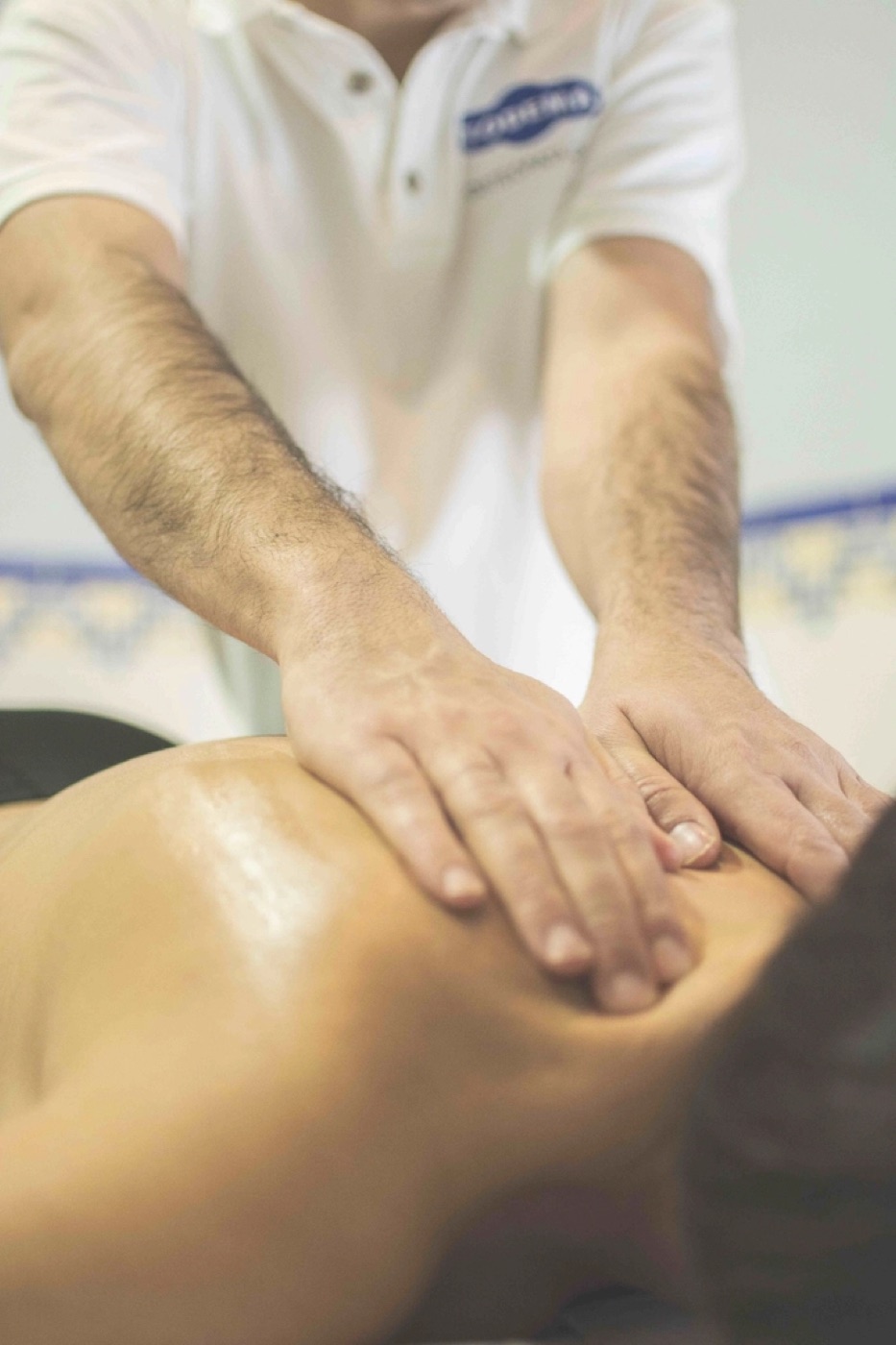
Much sciatica-type pain comes from soft tissue — a tight piriformis or glutes compressing the sciatic nerve, or lower-back muscle guarding — not always a disc. Releasing those restrictions with massage and Active Release Techniques (ART®) often reduces pain significantly, frequently within one to three sessions when the cause is muscular. ART® is especially effective because it targets adhesions around the nerve itself. Lasting relief pairs hands-on work with targeted movement.
Sciatica is one of the most common complaints I see, and it's also one of the most misunderstood. People assume the sharp, shooting pain down the leg means something is seriously wrong with their spine. Sometimes a disc is involved. But very often, the real culprit is muscular — and that's good news, because muscular causes respond well to the right hands-on work.
What Sciatica Actually Is
The sciatic nerve is the largest nerve in your body. It runs from your lower back, through the deep muscles of your hip and buttock, and down the back of each leg. "Sciatica" isn't a diagnosis so much as a description of a symptom: pain, burning, numbness, or tingling that travels along that nerve's path.
The question that matters is what's irritating the nerve. Get that right, and the treatment becomes obvious.
The Causes Massage Can Address
A large share of sciatica-type pain comes from soft tissue compressing or irritating the nerve:
- The piriformis muscle: this deep hip muscle sits right over the sciatic nerve. When it's tight or in spasm, it can compress the nerve directly — a pattern sometimes called piriformis syndrome.
- Tight glutes and adhesions: restrictions in the buttock muscles can entrap or irritate the nerve as it passes through.
- Lower-back muscle guarding: spasm and tension in the lumbar muscles refer pain and can feed the whole pattern.
Each of these is a soft-tissue problem, which means soft-tissue therapy can address it directly.
Why ART® Works So Well for Nerve Pain
As an ART® Certified Provider, the technique I reach for most with sciatica is Active Release Techniques. ART® is built specifically to find and release adhesions around nerves, muscles, and connective tissue. Instead of broadly working a region, I palpate for the exact restriction that's irritating the sciatic nerve, then use precise, movement-based contact to release it.
For nerve-related pain, that precision matters. Freeing the nerve at the specific point of compression often produces faster, more durable relief than general massage. When the piriformis is the problem, releasing it can change someone's pain dramatically in a single session.
When It's More Than Muscle
I want to be straight with you: not all sciatica is muscular. When a disc is involved, or when there are red-flag symptoms like progressive weakness or loss of bladder or bowel control, that's a medical issue that needs a physician. Even then, massage has a supporting role — calming the muscle guarding that piles on top of the disc problem — but it's part of a team approach, not a standalone fix.
Part of my job is telling you honestly which situation you're in after I assess you.
What a Realistic Plan Looks Like
When the cause is muscular, many people feel meaningful relief within the first one to three sessions. Lasting resolution usually comes from a short series of focused work paired with targeted stretching and movement so the restriction doesn't simply rebuild. For pain that's been building for months or years, give it a few weeks of consistent work before expecting it to fully settle.
If you've got shooting pain down your leg and you're tired of guessing, book a free 15-minute consult. I'll assess what's actually driving it and give you an honest read on whether soft-tissue work is the right tool — and how quickly you should expect to feel different.
Frequently Asked Questions
Can massage help with sciatica?
Often, yes — depending on the cause. A large share of sciatica-type pain comes from the piriformis muscle in the deep hip compressing the sciatic nerve, or from tight glutes and lower-back muscles irritating the nerve's path. Massage and soft-tissue work release that compression and can significantly reduce pain. When the cause is a disc issue, massage can still help manage the surrounding muscle guarding, but it's part of a broader plan.
What causes that shooting pain down the leg?
The sciatic nerve runs from your lower back through the deep hip and down the back of each leg. When something compresses or irritates it — a tight piriformis, glute adhesions, lower-back muscle spasm, or a disc problem — you feel it as sharp, shooting, or burning pain that travels down the leg, sometimes with numbness or tingling. Identifying the source is the key to treating it effectively.
Is ART better than regular massage for sciatica?
For nerve-related pain, often yes. Active Release Techniques (ART) is specifically designed to find and release adhesions around nerves, muscles, and connective tissue. For sciatica driven by soft-tissue compression of the nerve, ART's precise, movement-based approach frequently produces faster results than general massage by targeting the exact restriction irritating the nerve.
How many sessions until I feel relief?
Many people feel meaningful relief within the first one to three sessions when the cause is muscular. Lasting resolution usually takes a short series combined with targeted stretching and movement, especially for restrictions that built up over months or years. Your therapist should give you an honest read after assessing what's actually driving the pain.